Everyone loves the idea of a partnership. Almost nobody does the work required to make one last.
Let’s start with the reason you clicked on this…A failed collaboration, it can be embarrassing, like any relationship that goes bad.
You’ve been in a collaboration that felt promising and ended badly. Or you’re considering one right now, and something in the back of your mind is telling you to slow down. Or you’ve watched a competitor’s partnership implode from a distance and quietly thought — I could have told you that was going to happen.
You’re not wrong to be cautious. But before we get into what goes wrong, let’s be clear about something: this series isn’t a warning against collaboration. It’s a case for doing it better.
BevFluence® was built on this. The founding belief — the one that has driven every campaign, every event, every creator partnership since 2017 — is that this industry is stronger when people work together. Stronger when a regional winery reaches beyond its own audience. Stronger when a spirits brand earns credibility through voices that aren’t on its payroll. Stronger when content creators, brands, and platforms find the structure that lets all of them win at once. That belief has been tested in practice, not just theory — in successful campaigns across, Chicago, Baltimore, Texas, and San Diego, through a partnership with Cider Canada, and in 2020 when a global shutdown dismantled every plan we had made and we pivoted entirely online, collaborating Michigan Wine Collaborative with dozens of creators across every platform to keep the community alive and the brands visible when nothing else was moving.

The collaborations that worked taught us something. So did the ones that didn’t. This series is about both.
The data is not encouraging for the industry as a whole.
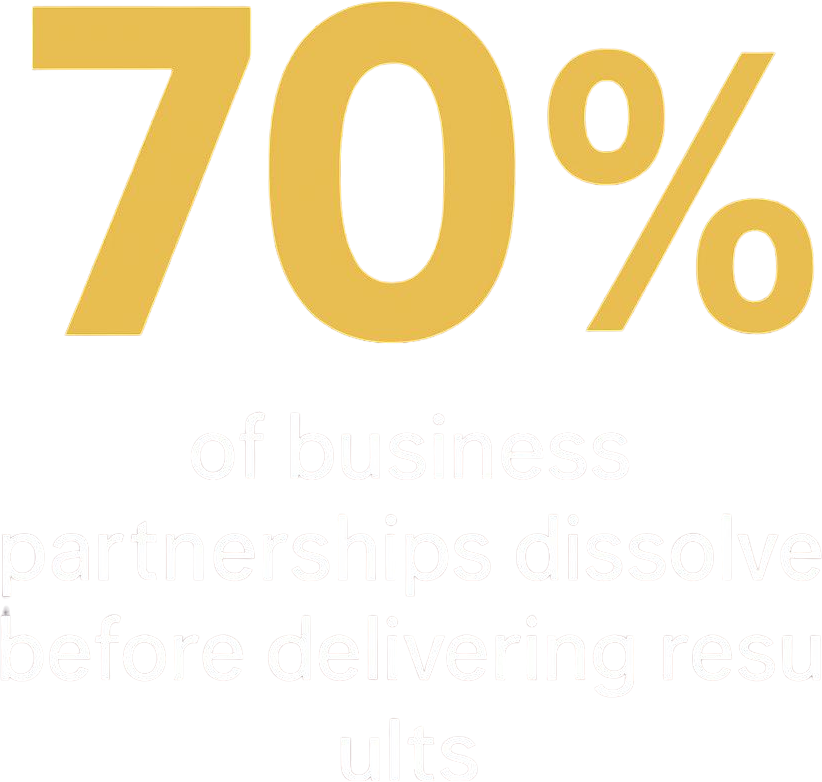
Research consistently finds that roughly 70% of business partnerships dissolve — not because the people involved were incompetent or because the market turned against them, but because the partnership itself was built on assumptions rather than agreements. Enthusiasm instead of architecture. Vibes instead of vision.
The hospitality industry is not immune. If anything, the beverage world is more exposed than most. It’s a relationship-driven industry where deals get made over pours, partnerships get hatched at trade shows, and a handshake across a barrel still feels more binding to many in this business than a contract. That culture produces genuine community. It also produces a remarkable number of collaborations that should have had a written scope but didn’t, a clear exit clause but forgot to write one, and a shared definition of success that everyone assumed everyone else already understood.
They didn’t.
This series is a direct look at why that keeps happening. Not from a theoretical view, but from inside actual failed partnerships — including one we’ll walk through in real detail in Part Two. In this first article, we’re laying the foundation: what collaboration actually is, why it tends to fall apart before the real work even starts, and what the warning signs look like from the inside before anyone admits the thing isn’t working.
Read this one carefully. The patterns here feel completely normal while they’re happening.
Collaboration Is a Structure, Not a Feeling
Here’s the first thing people get wrong: collaboration is treated like a personality trait. Some businesses are collaborative. Others aren’t. Some people are natural partners. Others are lone wolves. This framing is almost entirely useless.
Collaboration is a structure. It’s a set of agreements between two or more parties about how they’ll pursue a shared goal, who is responsible for what, how decisions get made, how disagreements get resolved, and what happens when someone wants out. Everything that isn’t explicitly agreed upon becomes an assumption. And assumptions are where partnerships go to die.
The reasons people pursue collaboration in the first place are real. Shared cost. Reduced risk. The creative upside comes from putting more than one brain in the room. When a regional winery partners with a spirits brand on an event series, neither party bears the full cost of production. When a hospitality group co-develops a private label with a beverage partner, both reduce exposure and expand distribution potential. The logic is sound.
The problem is that these advantages get treated like guarantees. Shared cost assumes both parties define cost the same way. Reduced risk assumes the risks were identified before the deal was signed. Creative upside assumes creative alignment — that when two people say “innovative,” they mean the same thing.
They rarely mean the same thing.
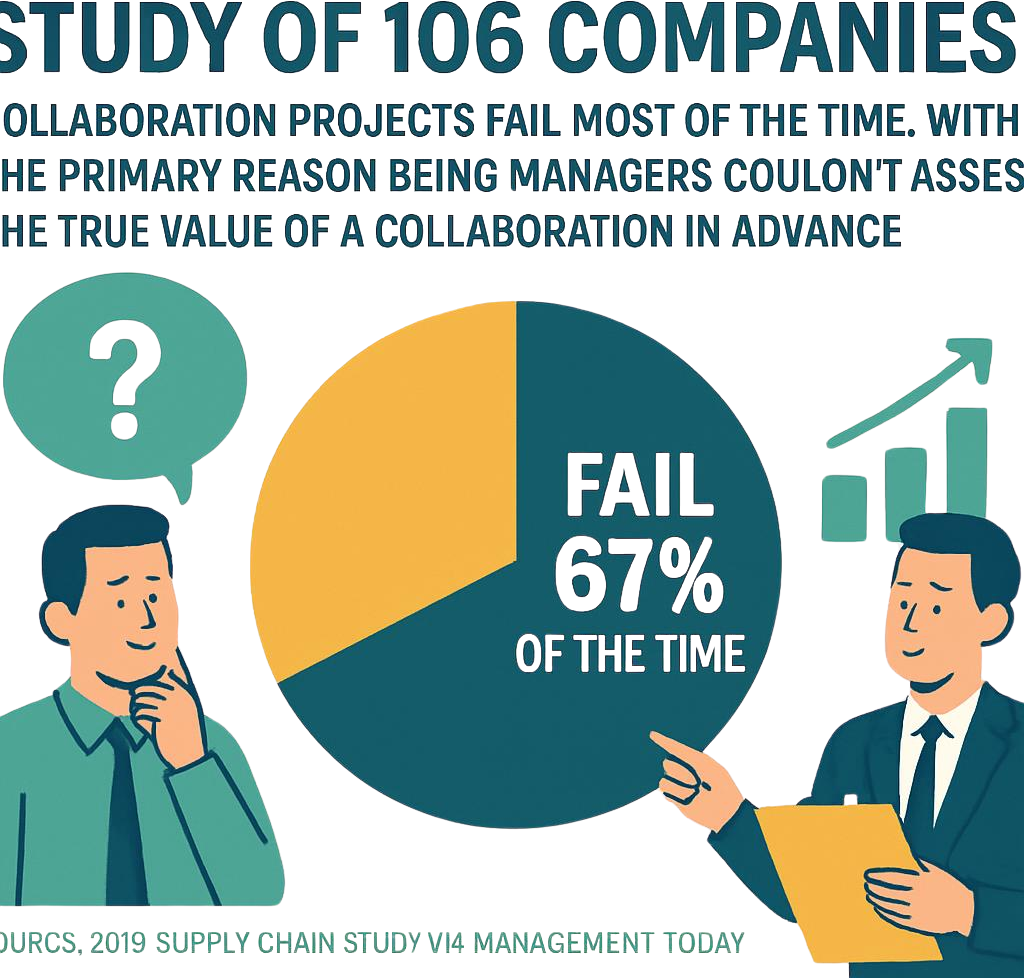
A 2015 study examining 106 companies and why their supply chain collaborations failed found that managers struggled most with a deceptively simple challenge: assessing the true value of any given collaboration in advance. Organizations consistently invested scarce resources in partnerships with little real co-creation potential. The collaboration looked good on a whiteboard. It fell apart in execution because neither party had done the hard work of defining what value actually meant to them before anyone signed anything.
In the hospitality industry, where relationships move fast and trust is currency, hard work gets skipped constantly. And it always shows up in the same places.

The Problem Starts at the Beginning — Not the End
Most collaboration failures aren’t dramatic. They don’t begin with a blowup or a betrayal. They begin with a gap — usually a small one — that nobody addressed early on because doing so would have felt awkward, or presumptuous, or like a sign that you didn’t trust the person sitting across from you.
That gap grows. Sometimes slowly over months. Sometimes fast, inside a single bad week. By the time it’s visible to everyone, it’s usually too late for a clean resolution.
Every gap traces back to the same source: the beginning. The decisions that weren’t made. The roles that weren’t defined. The questions that weren’t asked when everyone was still excited about the idea, and nobody wanted to be the one to kill the mood by asking the uncomfortable question.
Who are the actual stakeholders?
The first question every collaboration needs to answer is also the one most often skipped: not who’s in the room for the pitch meeting, but who has real decision-making authority. Who has to sign off on financial commitments? Who represents a third party — a membership, an investor, an employee base — that isn’t at the table but will be affected by every decision made?
In the beverage world, this gets complicated fast. A regional wine association’s executive director doesn’t just represent the association. They represent the member wineries, the sponsors, the board, and a community of consumers who trust the association’s voice. When that person signs a partnership agreement, they’re not just committing their own time and resources — they’re making a decision on behalf of stakeholders who were never asked. When the deal creates friction — and it will — those invisible stakeholders become very visible, very quickly.
According to research from MIT Sloan Management Review, drawing on over a decade of organizational network analysis across companies ranging from 2,200 to 45,000 employees, one of the most consistent collaboration failure patterns is leaders who cannot step back from their personal agendas to see what is actually happening within the partnership. The people closest to the deal are often the least able to see it clearly.
Think about any two craft beverage brands co-hosting an event series. Both parties show up to the first planning call representing their own sales goals, their own brand equity concerns, their own relationship with the venue — none of which has been named yet. The conversation sounds collaborative. Underneath it, two completely different sets of priorities are already pulling in different directions, and neither party knows it yet.
Stated Purpose vs. Real Purpose
Every partnership has a stated purpose. Not every partnership has a real one.
Stated purpose sounds like: “We’re going to grow both of our businesses by combining our networks.” Real purpose sounds like: “I need someone to close sponsors because I’m working 60-hour weeks and I have no more capacity.” These are not the same goal. They require different structures, different timelines, and different definitions of success. One is a partnership. The other is a staffing solution wearing the language of a partnership.
When those two things aren’t the same — and they often aren’t — the collaboration is being built on a foundation that’s partly fiction. One party is solving for the stated goal. The other is solving for the real one. Six weeks in, neither is getting what they actually came for, and neither fully understands why.
Ambassador Deborah L. Birx, describing the structure behind one of the most successful public-private partnerships in modern history — the PEPFAR global health initiative — put it plainly, per the Stanford Social Innovation Review: the partnership required not only a shared goal but also clarity and transparency throughout the entire pathway to achieving it. Every partner needed to understand not just what they were working toward, but how they were going to get there together. That clarity had to exist before the work started, not be discovered during it.
For a distillery collaborating with an influencer network, or a winery entering a co-branding agreement, or a hospitality group bringing on a marketing consultant, the principle is identical. If the pathway isn’t clear before anything is signed, the contract is a liability waiting to be triggered.
The IP Trap Nobody Talks About
Here’s something that doesn’t make it into the academic studies but is all over the real conversation in this industry: intellectual property kills more beverage collaborations than ego does. And it happens quietly, in legal and marketing departments, long after the founders have already shaken hands.
Adam Spiegel has spent years on both the supplier and trade sides of the spirits industry. He’s watched more collaboration ideas die in the planning stages than most people have had. His read on why is blunt:
“Most of the time, there’s so much of that intellectual property that IP problems become just overwhelming.”
He’s not talking about complex licensing disputes between major conglomerates. He’s talking about two craft brands — two people who genuinely want to work together — getting stopped cold by something as basic as a label.
“Even just getting the logo of the winery on the label could be exhausting.”
Spiegel was involved in a wine-finished whiskey project with Sonoma Distilling. The winemaker made a genuinely exceptional port barrel. The product had real market potential. Everyone at the creative level was excited. Then the winery’s legal team and marketing team got involved. Suddenly, there were questions about what the association would imply, what the licensing structure would look like, and what they’d get out of it financially. The deal collapsed not because the product wasn’t good — it was — but because nobody had figured out the IP framework before the excitement took over.
“They didn’t want to have the logo applied. Then they were also like, ” What are we going to get out of it? There’s no way to hand money to them — a marketing fee or a licensing fee. So it becomes a little bit of a nightmare.”
This is the version of undefined roles that beverage brands hit specifically. Two founders agree on a concept. Two legal and marketing departments disagree on the terms. And the founders, who made the original decision to collaborate, don’t always have the authority — or the appetite — to push it through.
Everyone Has an Agenda — Including You
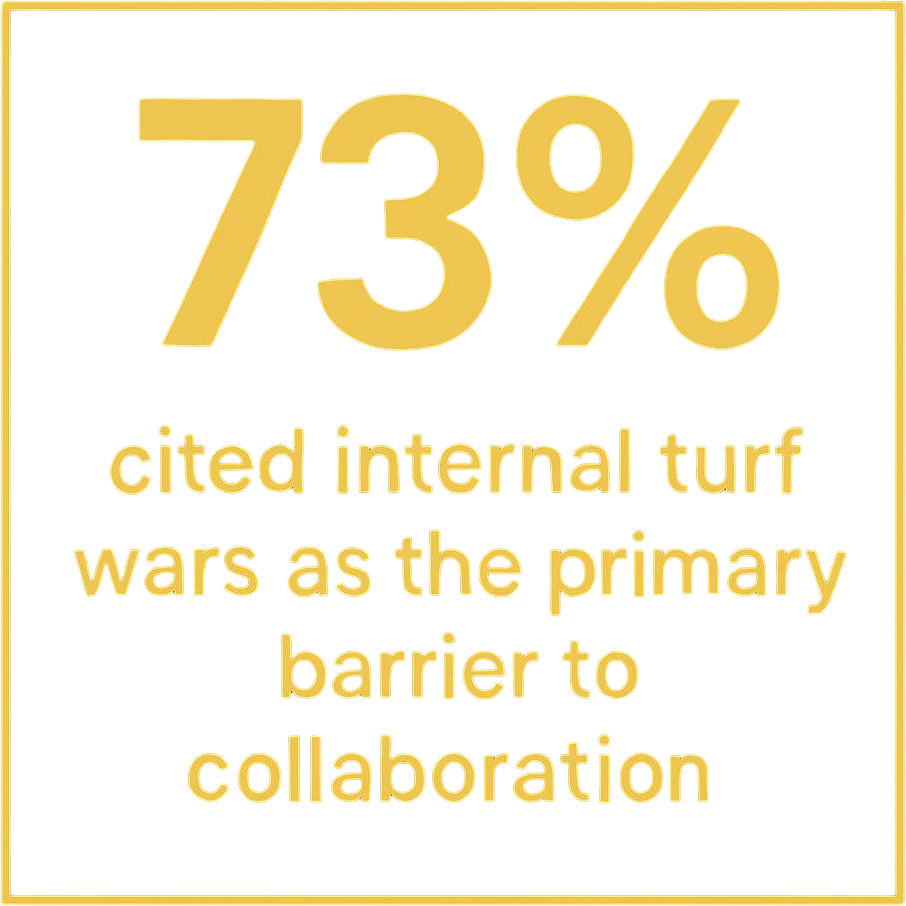
A 2015 study of supply chain collaborations found that 73% of companies cited turf wars as a primary barrier to successful collaboration. Turf wars — competition over credit, control, and ownership — are the single most consistently underestimated threat to any joint venture. They’re underestimated because nobody ever admits in advance that they’re bringing one.
One senior manager quoted in the research put it plainly: “People are more concerned about who will get the glory or the blame rather than evaluating whether or not a decision will benefit the entire company.”
Every party comes into a collaboration with its own agenda. This is not a character flaw. It’s the accurate description of why anyone enters into a collaboration in the first place — you want something, the other party wants something, and the partnership is the vehicle you’ve agreed to use to get there. The implicit assumption is that your wants are compatible enough to share a vehicle.
They are often not fully compatible. And the incompatibilities don’t usually reveal themselves cleanly. They reveal themselves as friction. Scheduling conflicts. Delayed responses. Small disagreements about process that feel disproportionately charged. Decisions that one party made unilaterally because waiting felt like losing ground.
Adam Spiegel saw this pattern repeatedly in attempts to build industry charity brands through organizations like the USBG. The concept made sense: a brand where the people pouring the product actually had a stake in its success.
“If they’re the ones pouring the product, they may actually care about pouring the product more.”
But the moment the idea moved from concept to execution, the red tape arrived. Whose name goes on it? Who controls the IP? Who gets the revenue?
“When everybody who was involved started to look at all of the red tape that was going to be necessary to get it done, it just became overwhelming. Which is the story of how most people run into problems.”
The Test Is Not a Strategy
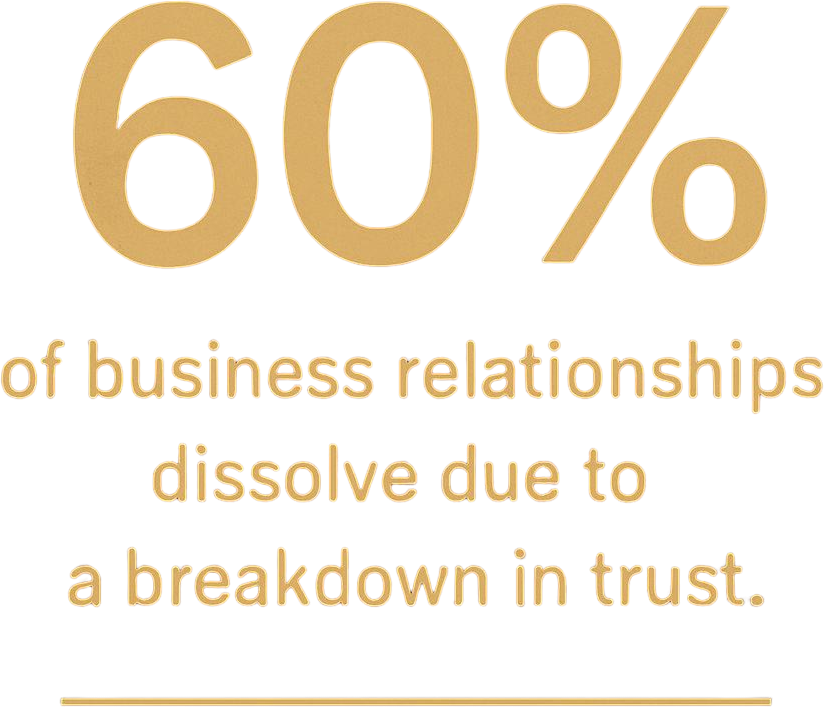
According to Harvard Business Review research, 60% of business relationships dissolve due to a breakdown in trust — and the breakdown most often happens not because one party did something malicious, but because both parties stopped nurturing the relationship once the initial excitement wore off and the real work began.
There’s a specific trust failure pattern worth naming directly: the deliberate test. One party creates a scenario to gauge the other’s response, then uses the outcome to decide whether the relationship is viable.
Testing a partner is not a diagnostic tool. It’s a breach of the collaboration’s foundation. What it reveals — more clearly than it reveals anything about the person being tested — is that the party running the test hasn’t built enough real trust to have the direct conversation they actually need.
Research from the Harvard Law School Program on Negotiation points to why this backfires: our sense of fairness in any dispute is heavily shaped by egocentrism. We struggle to see situations from another person’s perspective. A test designed by one party and evaluated by the same party will always confirm the expected result. That is not information. That is a self-fulfilling prophecy dressed up as due diligence.
The most productive partnerships start with the difficult conversations. The ones that collapse most spectacularly are the ones that saved them for last.
Do Not Go Nuclear First
There’s a reflexive move that shows up in almost every collaboration breakdown at some point: the sudden, unilateral decision. Exercising a pull-out clause before the work is fully underway. Cutting off access to a shared platform. Issuing a statement to your team about why the partnership is ending before you’ve finished the conversation with your partner.
This is almost always the wrong move. Not because the partnership necessarily deserves to be saved — sometimes it doesn’t — but because the unilateral move forecloses options that a conversation might have opened. You don’t know where a road leads until you’ve walked it. The nuclear option ends the road.
A unilateral decision made mid-partnership is a signal — to your partner, to your team, to the broader industry — that your house is not in order. Going with your gut is frequently what leads to the problem in the first place.
Cutting ties can feel like a clean solution. It rarely is. What it usually is: a decision made in a moment of frustration that removes any possibility of a creative outcome neither party had thought of yet.
Not Every Collaboration Has to Last Forever — And That’s the Point
Here’s the reframe that changes everything: collaboration doesn’t have to be permanent to be successful.
This industry tends to treat the end of a collaboration as evidence of failure. It isn’t. People move on. Priorities shift. Circumstances change. What made two brands a natural fit in 2020 may not make them a natural fit in 2025, and that’s not a tragedy — it’s the normal lifecycle of a business relationship in a fast-moving industry.
Attorney William Piercy, who specializes in partnership dissolutions, makes a point worth putting on the wall: “Unlike a marriage, business partnerships are supposed to end.” The goal isn’t a collaboration that lasts forever. The goal is a collaboration that delivers on its original promise and exits cleanly when that promise has been fulfilled.
The best collaborations are often designed with an end in mind. Two craft brands co-releasing a seasonal product don’t need a permanent merger — they need a clearly scoped project with defined deliverables, a shared understanding of what success looks like, and an agreed path to a clean separation upon completion. That’s not pessimism. That’s architecture.
Design for the end from the beginning. Not because you expect failure, but because the people who plan their exits are the ones who get to choose them.
What’s Coming Next
This article is the foundation. The patterns here — unstated assumptions, undefined roles, IP nightmares that nobody planned for, testing instead of trusting, going nuclear instead of talking, and treating every collaboration like it’s supposed to last forever — are the ones that determine whether a partnership has a real chance before anyone shows up to do the work.
In Part Two, we go inside an actual partnership dissolution. Real emails. Real decisions. Real moments where the outcome could have gone differently — and one moment where it couldn’t. Not to relitigate it, but because the patterns inside a real failure are worth more than any framework built in the abstract.
In Part Three, we ask the question nobody wants to answer honestly: Am I the problem? Because in almost every collaboration breakdown, both parties have a version of the story in which they’re the reasonable ones. Learning to interrogate your own version — specifically, without self-protection — is the discipline that separates operators who grow from failed partnerships from the ones who repeat them.
The collaborative spirit in this industry is real. It’s one of the things that make beverage and hospitality careers worth building. The goal isn’t to be more guarded about collaboration. It’s to be better at it. That starts with being clear-eyed about why it fails — and honest enough to plan for what you usually pretend you won’t need.
Part Two: Inside a Real Failure — What the Emails Actually Said Part Three: Am I the Problem?
Sources: A full APA reference list appears at the end of Part Three. Key research used in this article includes organizational network analysis from MIT Sloan Management Review, partnership failure data from the Stanford Social Innovation Review, trust research from Harvard Business Review (Paul J. Zak), conflict resolution frameworks from the Harvard Law School Program on Negotiation, and supply chain collaboration failure data cited in Management Today (2020).