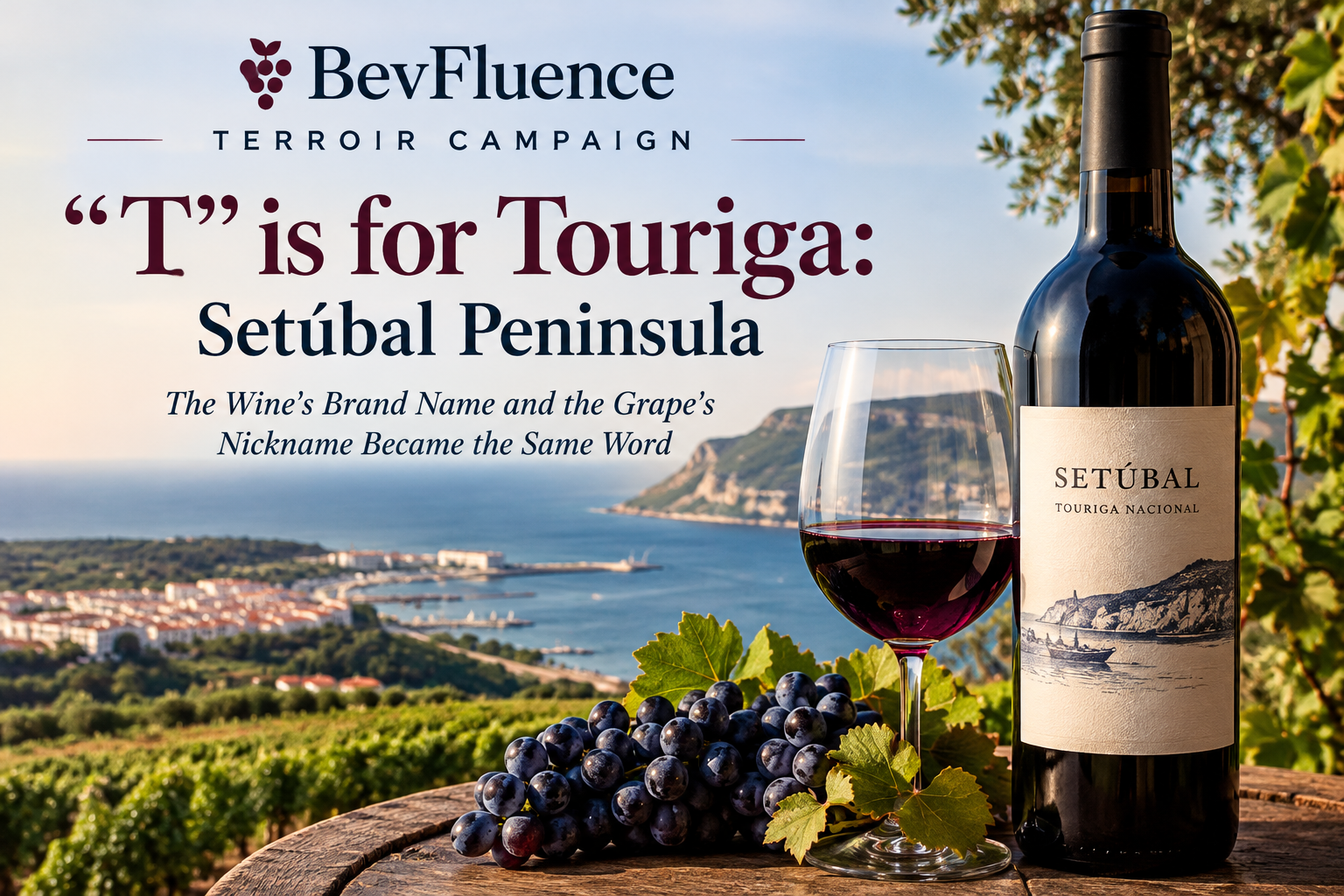
The Wine’s Brand Name and the Grape’s Nickname Became the Same Word
José Maria da Fonseca, established in 1834, planted Castelão at its Quinta da Bassa Cova estate and released it under the brand name Periquita — a name so commercially successful that the grape itself picked up “Periquita” as an informal nickname across southern Portugal, to the point where the brand and the grape became functionally interchangeable in everyday conversation. That’s not a common outcome for a wine brand; most successful labels stay labels, and the underlying grape keeps its own name regardless of how well the bottle sells.
The estate’s influence extends well past that one naming quirk. José Maria da Fonseca is also Portugal’s oldest producer of Moscatel de Setúbal, a fortified sweet wine aged in wood for years or decades, made from Moscatel de Setúbal or Moscatel Roxo grapes grown on the limestone slopes of Serra da Arrábida. That’s two separate legacy claims from one estate: the brand that renamed a grape, and the oldest continuous production of the region’s other signature style.
Serra da Arrábida’s limestone terrain, rising directly from the Atlantic coastline, gives Setúbal’s Moscatel wines a mineral backbone that fortified sweet wine from warmer, flatter terrain typically lacks. The combination of coastal humidity and limestone drainage produces grapes with enough natural acidity to balance the wine’s eventual fortification and residual sugar — without that acid structure, decades of wood aging would just produce something cloying rather than the complex, orange-peel-and-walnut character serious aged Moscatel de Setúbal is known for.
Castelão itself, independent of the Periquita branding story, is worth understanding on its own terms: a red grape capable of both everyday, approachable wine and more serious, structured bottlings depending on yield and vineyard selection, grown across the peninsula’s sandy coastal soils. The grape’s flexibility — from easy-drinking to serious — mirrors the estate’s own dual identity as both a large-scale commercial producer and the keeper of one of Portugal’s oldest fortified-wine traditions.
A wine brand name that became the grape’s own nickname, from an estate founded in 1834 that also happens to be the region’s oldest Moscatel de Setúbal producer, is a specific and verifiable claim — not a generic “historic Portuguese fortified wine” pitch that could apply to half a dozen other estates without changing a word. Serra da Arrábida itself carries its own protected status as a natural park, its limestone ridgeline running directly along the Atlantic — the same geography that gives the peninsula’s wines their maritime-influenced structure also happens to be one of Portugal’s most protected landscapes, meaning the vineyard land feeding both Castelão and Moscatel de Setúbal sits inside a boundary that can’t simply expand to meet demand the way flatter, less protected wine regions can. That constraint has an upside most producers elsewhere don’t get to claim: land inside a protected natural park can’t be diluted by unlimited new plantings chasing demand, which means the vineyard sites already producing Setúbal’s best Castelão and Moscatel today are functionally the same sites that will define the region’s identity a generation from now. That continuity is a real point of difference from regions where expansion pressure keeps shifting which vineyards actually matter most — Setúbal’s boundary is fixed by park designation, not market demand, which means José Maria da Fonseca’s 190-year head start on this exact land carries weight a newer, unprotected region simply couldn’t replicate. Few Portuguese wine stories combine a naming accident, a fortified-wine legacy, and a fixed geographic boundary this cleanly into one estate’s 190-year history.
This window closes October 31, 2027. What’s happening in Setúbal Peninsula won’t wait for the next cycle. Be in it — bevfluence.com/terroir