BevFluence TERROIR Campaign – “I” is for Italian Varieties
Campania’s viticulture runs on ash. Ancient deposits from Mount Vesuvius and historical eruptions across Irpinia built the volcanic soils that define the region’s three signature grapes, and one estate has spent decades proving all three deserve serious treatment rather than a single flagship.
Taurasi DOCG must contain at least 85% Aglianico, a late-ripening, thick-skinned grape harvested into late October and November on ash-laden soil, and the wine carries a legal minimum of three years of aging, one in wood — Riserva bottlings need four. Mastroberardino’s benchmark Radici bottling built the modern reputation for the style, delivering dark plum, sour cherry, leather, tar, graphite, and dried violets from grapes that demand that much patience before release. Feudi di San Gregorio works the same grape from the other direction, producing both accessible modern Taurasi and site-specific bottlings like the single-vineyard Piano di Montevergine and a pre-phylloxera single-vineyard release called Serpico — proof that Aglianico can carry the same site-obsession usually reserved for Burgundy or Barolo.
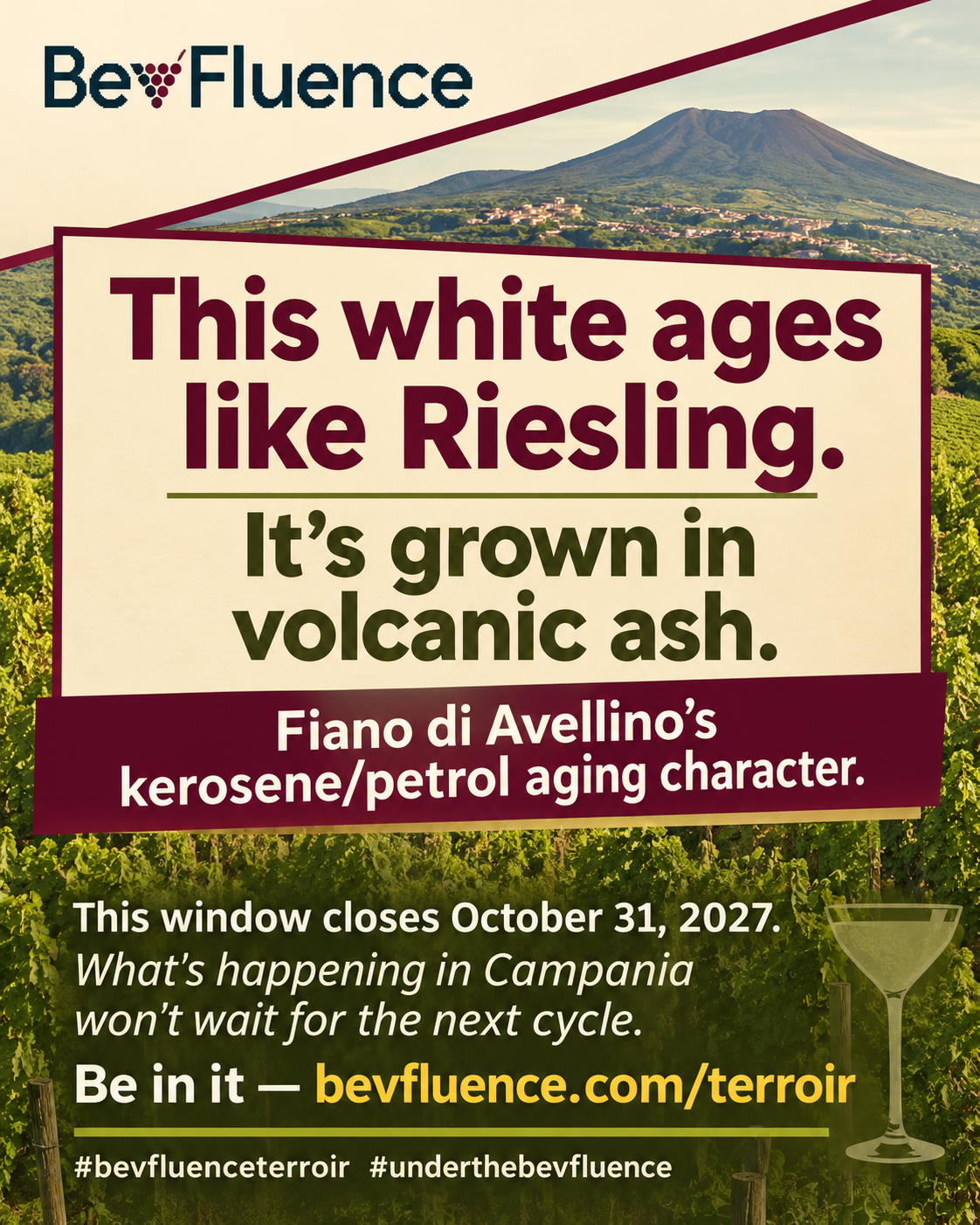
The white side of Irpinia is just as specific. Fiano di Avellino DOCG, grown at high elevation around the town of Lapio, produces aromatic white wine with white peach, orange blossom, hazelnut, and a mineral saltiness — and it ages the way great Riesling does, developing kerosene and petrol notes over time that most people only associate with German or Alsatian wine. Greco di Tufo DOCG comes off soil that’s literally sulphur-rich chalk and tufa around the town of Tufo, producing deep golden, structured white wine with firm phenolic weight, sharp acidity, and aromas of green apple, dried pear, and crushed flint.
Both Mastroberardino and Feudi di San Gregorio work across all three grapes — Aglianico, Fiano, and Greco — from the same volcanic hills, meaning a single estate visit covers a DOCG red requiring years of legal aging, a white that develops petrol notes like aged Riesling, and a second white grown on soil defined by its own sulphur content. Falanghina del Sannio adds an approachable, citrus-forward option outside Irpinia proper, and along Vesuvius itself, Coda di Volpe and Piedirosso get blended into Lacryma Christi del Vesuvio — a wine literally named after the volcano that made the soil possible.
Three separately classified grapes, one set of ash-built hills, and two estates credible enough to work all three at a serious level. That’s a specific claim, not a “Southern Italian wine” generalization — and it’s the reason Campania belongs in this campaign on its own terms.
No US-based Aglianico, Fiano, or Greco producer appears in any project file for Campania specifically. Flagged, not filled.
The ash itself deserves more credit than it usually gets in a category pitch. Vesuvius’s historical eruptions and Irpinia’s own volcanic history didn’t just leave behind dramatic scenery — they left mineral-dense, well-draining soil that forces vine roots deep and concentrates flavor in low-yield conditions, the same basic mechanism that makes Etna’s basaltic slopes work for Nerello Mascalese two regions over. Aglianico’s thick skin and late ripening window exist specifically because the grape evolved to handle that soil and Campania’s long, warm autumn — harvest routinely runs into November, well past when most red grapes elsewhere in Italy are already fermenting. That late harvest window is also why Taurasi’s minimum aging requirement runs longer than most Italian DOCG reds outside Piedmont and Tuscany — a grape this thick-skinned and tannic needs the extra year in bottle and barrel just to soften into something approachable, let alone age-worthy.
This window for registering for the BevFluence Terroir campaign closes October 31, 2027. What’s happening in Campania won’t wait for the next cycle. Be in it — bevfluence.com/terroir