Riesling has long been regarded as one of the world’s most expressive white grape varieties, yet in the United States it remains far less institutionally embraced than Chardonnay or Sauvignon Blanc. Its history is deep and well documented: the grape originated in the Rhine Valley of Germany, with written references appearing as early as 1435 and viticultural spread into Alsace by the late 15th century and Austria by 1700. Riesling’s success in Central Europe was shaped by climate as much as culture. During the Little Ice Age, its cold‑hardy physiology—thick bark, compact leaves, and the ability to ripen slowly while retaining high acidity—allowed it to thrive where other varieties struggled, producing balanced fruit even in extreme conditions Springer. This resilience helped establish Riesling as a cornerstone of German and Alsatian wine identity, and it remains the most planted variety in Germany today, accounting for over 23,000 hectares of vineyards, with significant plantings also in Alsace, Austria, Luxembourg, northern Italy, and Central Europe more broadly.
Riesling’s climatic preferences are well understood — it excels in cool to cold continental regions where long ripening seasons preserve acidity and allow aromatic development. In Germany’s Mosel and Rheingau, this results in wines marked by apple, citrus, and stone‑fruit notes with pronounced acidity; in warmer but still temperate zones such as Alsace or Austria, Riesling can develop riper peach and citrus tones while maintaining structure. Outside Europe, Riesling has proven equally expressive in cool New World climates. It arrived in North America as early as the mid‑1600s, though early attempts failed; successful plantings emerged in the mid‑1800s in California and later spread to New York, Oregon, Washington, and Canada, where regions like the Finger Lakes and Okanagan Valley now produce distinctive, terroir‑driven styles Springer. Today, Riesling is grown across six continents, from Australia’s Clare and Eden Valleys to New Zealand and South Africa, demonstrating its adaptability and global relevance.
Given this rich history and proven versatility, the question remains: why hasn’t Riesling achieved broader popularity or institutionalization in the United States? Part of the answer lies in consumer perception. Riesling’s stylistic range—from bone‑dry to lusciously sweet—has often been misunderstood, with many American drinkers assuming the category is uniformly sweet. This misconception obscures the grape’s precision, transparency to terroir, and capacity for age‑worthy, dry wines. Another factor is market inertia: Chardonnay and Sauvignon Blanc dominate shelf space, restaurant lists, and marketing budgets, leaving Riesling underrepresented despite its quality and diversity. Producers who champion the grape often find themselves educating consumers one bottle at a time.
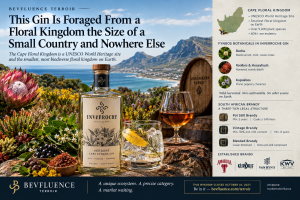
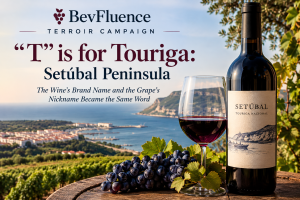
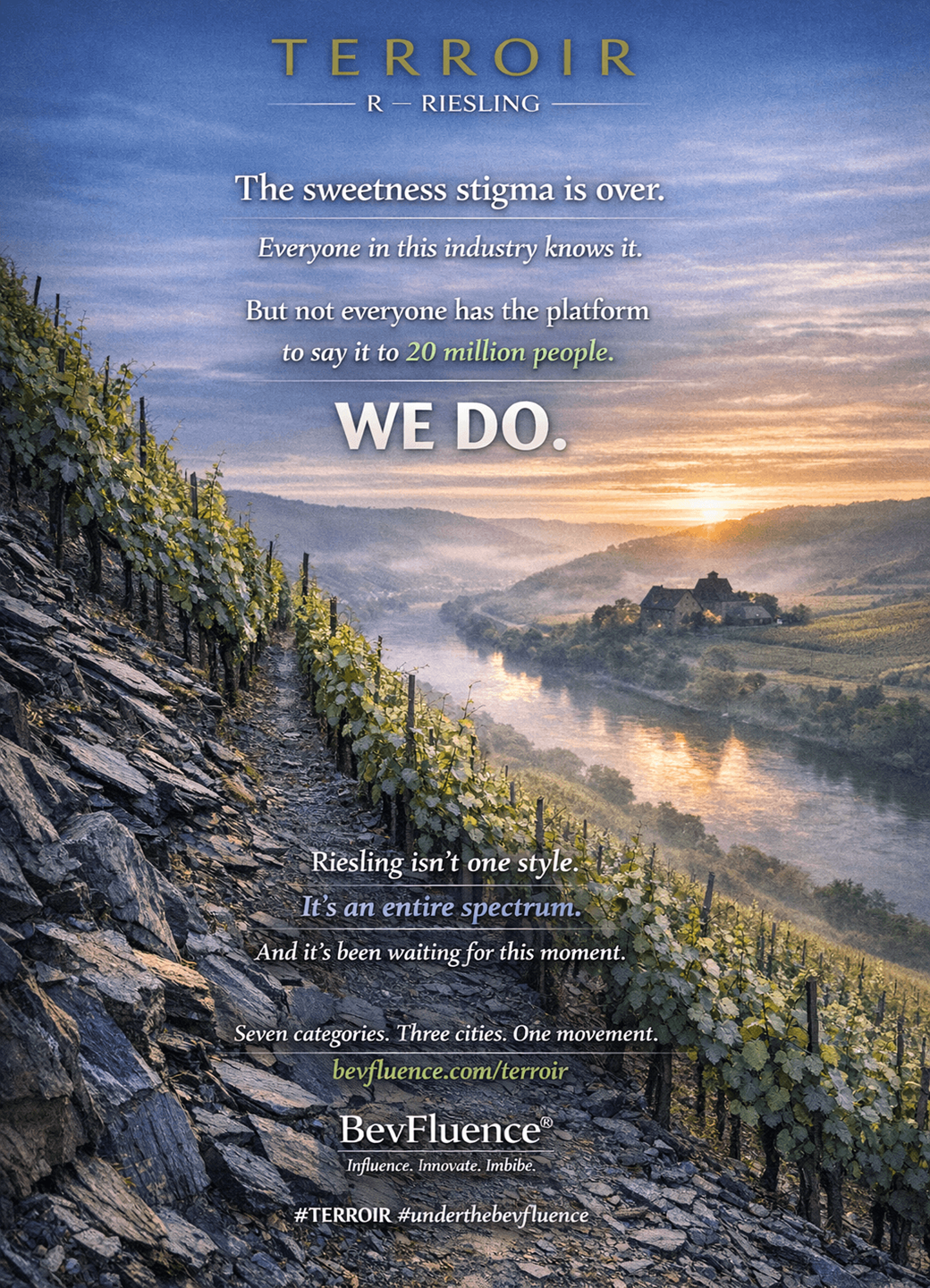
This is precisely where the BevFluence TERROIR campaign becomes relevant. TERROIR is designed to elevate seven under‑recognized but high‑potential beverage categories—including Riesling—through creator‑driven storytelling, blind expert review, and immersive industry events. The campaign integrates each participating producer into a broader cultural exploration of their category, offering media reach, educational activations, and placement in holiday gift guides and industry showcases. For Riesling producers, this represents an opportunity to reframe the narrative: to present Riesling not as a niche curiosity but as a globally significant, terroir‑expressive grape with deep historical roots and modern relevance. By participating, wineries gain access to a network of sommeliers, creators, and beverage directors who can help shift consumer understanding and expand the category’s footprint.
Riesling’s story is one of resilience, precision, and place. Its global history and proven adaptability suggest it deserves a stronger presence in the American market than it currently enjoys. For producers seeking to change that trajectory, aligning with a platform built to amplify overlooked categories may be one of the most effective steps forward.
We built TERROIR as a multi-dimensional campaign across seven locked categories: Touriga Nacional and Portuguese varietals, Emerging spirits, Riesling, Rum, Obscure, Italian varietals, and Rye. TERROIR captures Rum at its greatest inflection point. Producers who enter this campaign gain access to the exact audience — adventurous, education-hungry, cocktail-forward bartenders — most likely to champion their products on menus and in guest conversations.
Every entry goes through a blind panel review and receives a score. That score is published in the BevFluence Spring 2027 Beverage Guide. It appears in multiple holiday gifting features. It travels.
But the blind tasting is, perhaps, the least interesting part.
Every entry is activated across a network of 292 creators producing original content. Posts, reels, stories, long-form reviews, and educational pieces. Your product reaches 3 million-plus engaged followers in the beverage community. Buyers, bartenders, enthusiasts, and decision-makers who care about what they drink and who makes it.
Every entry goes through BevFluence Bartender Labs, where professional bartenders work with your product, create cocktail content, and generate the kind of hands-on endorsement that cannot be bought in a single influencer deal. Every entry is featured in Creator Studios where branded content is produced with a level of polish and intent that reflects the quality of what is in the bottle.
And all of this sits inside a live Speakeasy event series. Intimate gatherings of 30 people maximum. Three days. Education, production access, curated tastings, and the kind of room where real industry relationships are made. Not the kind where you hand someone a business card and hope they remember you.
The Early Bird entry fee is $435. Six or more entries drops every single entry to $325. Standard pricing opens August 1 2026 at $600. The deadline is December 31, 2026.
For context: $435 is less than a single post from a micro-influencer with 50,000 followers. It is a fraction of a trade show booth deposit. It is a rounding error on a PR firm retainer.
What you get in return is the largest concentration of content creation, blind judging, editorial coverage, bartender activation, and live event exposure that any beverage brand can access in a single entry. Nothing else in the market combines these elements at this scale, at this price, with this level of editorial independence and craft-forward positioning.
The alcohol market is changing. That is not a crisis. It is a filter. The brands that understand where attention is moving, who is moving it, and how to get in front of the right people with the right message will emerge from this consolidation period with more ground, not less.
TERROIR is where that work gets done.
Entry is open now through the end of 2026. Early Bird pricing closes July 31.
Register at BevFluence Collaborations.