A 300-Bottle Wine Sets the Ceiling for the Whole Region
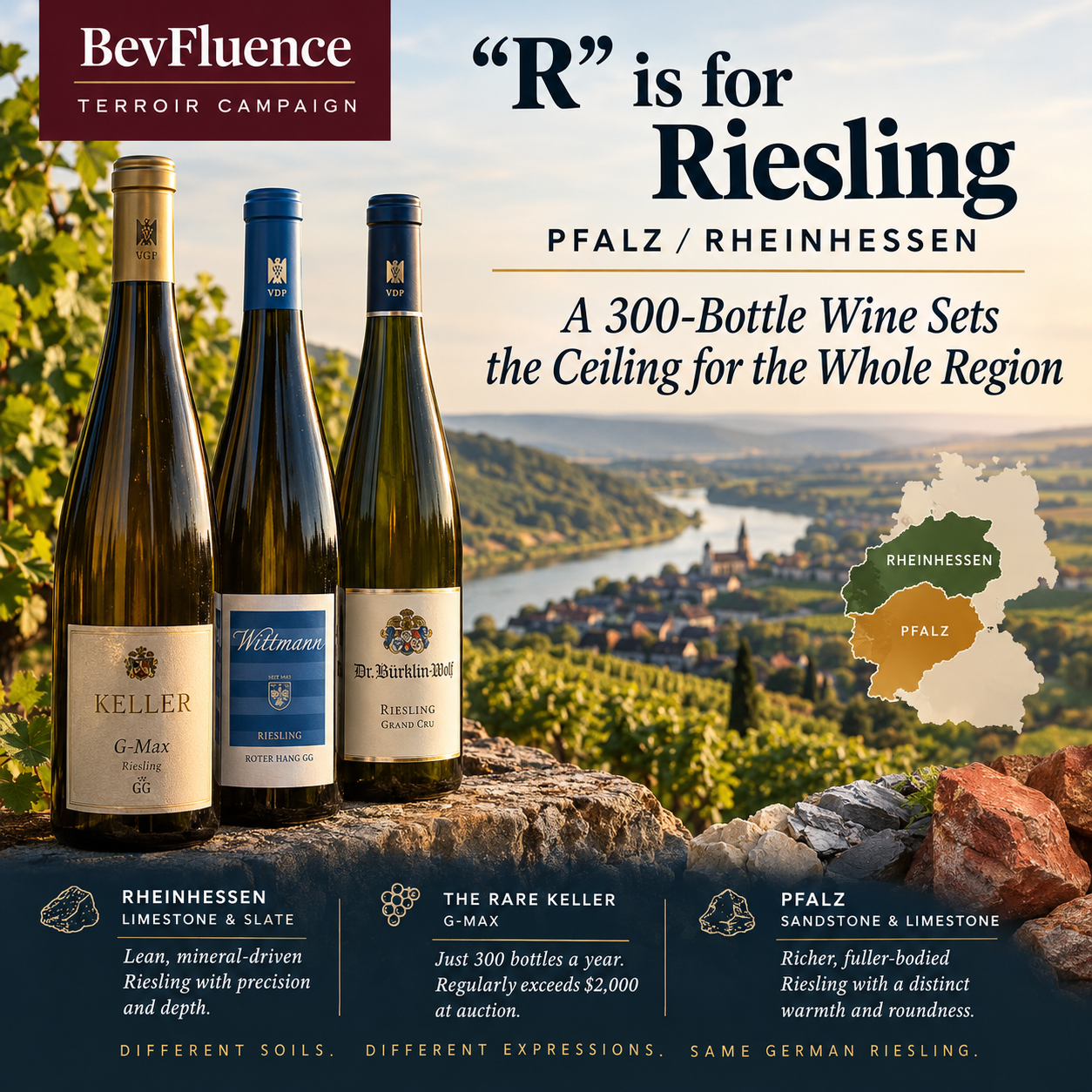
Keller’s G-Max, made from a secret Rheinhessen site in under 300 bottles a year, regularly exceeds $2,000 a bottle at auction — a ceiling that anchors the entire limestone-driven, dry-GG identity of the region and gives the rest of Rheinhessen’s producers a genuine reference point for what the area’s best terroir is capable of, even though almost none of them will ever produce anything close to that scarcity.
Wittmann and Kühling-Gillot work the same limestone and red-slate ground — Roter Hang, Pettenthal, Rothenberg — for dry and off-dry expressions that don’t chase G-Max’s extreme scarcity but still draw on the same underlying soil chemistry that makes the region’s top sites special. That shared geology means Rheinhessen’s broader reputation genuinely benefits from Keller’s rare bottling, even for producers working at a completely different production scale.
In neighboring Pfalz, Dr. Bürklin-Wolf farms biodynamically across a large range of Grand Cru sandstone-and-limestone sites for richer, fuller-bodied dry Riesling — a style genuinely distinct from Rheinhessen’s leaner, more mineral-driven wines despite the two regions sharing a border and often getting lumped together in casual conversation about German Riesling.
That casual lumping-together undersells both regions specifically because their soil compositions diverge in ways that show up reliably in the glass: Pfalz’s sandstone contributes a rounder, warmer character than Rheinhessen’s limestone and slate typically produce, meaning a Bürklin-Wolf Grand Cru and a Wittmann Roter Hang bottling, despite both being serious dry German Riesling from neighboring regions, taste like they’re making genuinely different arguments about what the grape can do.
A region can call itself elite, or it can point to a specific 300-bottle wine that auction houses treat as a benchmark. Rheinhessen and Pfalz have the second kind of proof, backed by a rotating cast of serious producers working related but genuinely distinct soil types across a shared border.
A single rare bottle setting the ceiling for an entire region’s reputation is a more specific, more verifiable claim than treating “Rhine wine” as one undifferentiated regional style. Keller’s scarcity, Wittmann’s site work, and Bürklin-Wolf’s biodynamic Pfalz range each tell a different part of the same larger story about German Riesling’s actual range south of the Mosel.
This window closes October 31, 2027. What’s happening in Pfalz / Rheinhessen won’t wait for the next cycle. Be in it — bevfluence.com/terroir